
Finding Embodiment in The Uncanny Canyon
When the physical world feels more like a synthetic simulation
Preface:
In a series of essays in partnership with Squarespace, we’re making sense of our relationship with reality and how culture is constructed.
Making it real is now an act of rebellion, a middle finger to the paralysis brought on by consensus collapse. The line between fact and fantasy continues to blur, but when reality is this negotiable, the soil for preferred futures is fertile. You can just do things. What’s the future you want to see? Making reclaims agency amidst lost meaning. So, don’t escape this reality — design the one you want. We desperately need your alternatives.
Literally make anything real with -10% off any site. I’ve been using Squarespace for 15 years, and cannot recommend them enough.
Build a better reality, then charge admission. With member-only areas, e-commerce and content monetization, create your space away from the noise. Decide a price and monetize products, services, courses, or any exclusive content. Make, sell, repeat. Fund your preferred future. No design experience required. Just the will to make something real.
The following piece is a collaboration between Matt Klein + Gray Broderick
Gray Broderick is a cultural insights writer and strategic advisor, helping brands understand emerging human values and translate them into emotionally and culturally intelligent strategy.
Don’t Fall In
Amidst the unease of the Uncanny Valley – the haunting phenomenon when synthetic life just nearly matches organic life – another chasm has opened up...
Under shadows created by the Cloud’s cast, there’s another world of déjà vu, one where now the physical world lacks any sense of organic life. It’s a dissonance felt in our lives away from the keyboard – something logically gives life, but lacks any sense of the living.
If the Uncanny Valley is about what technology looks like to us; the Uncanny Canyon is about what technology does to us.
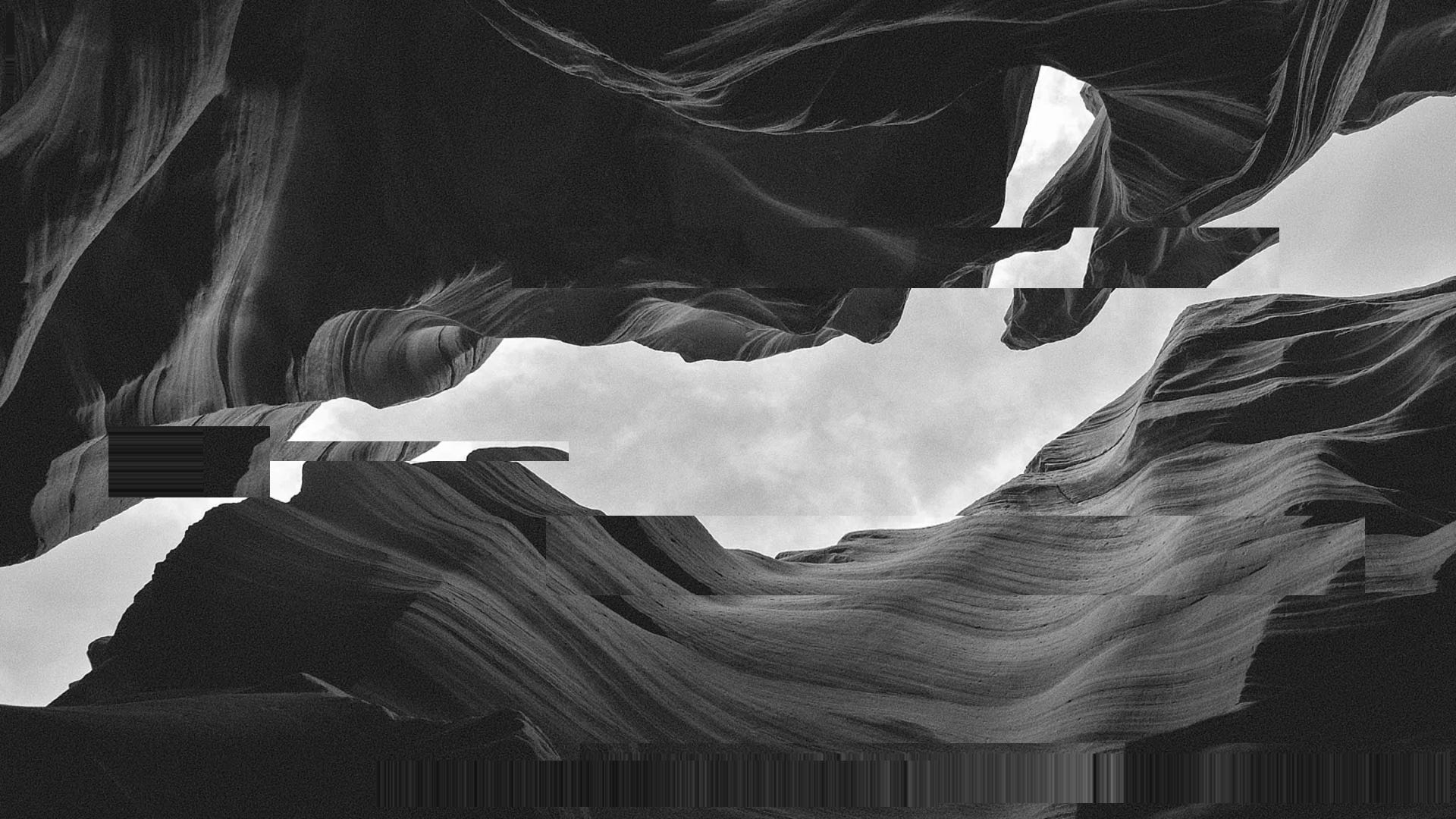
The Uncanny Canyon reveals the peculiar dynamic between organic life and digital life, specifically the degree to which our technological realities can override our biological realities. The Uncanny Canyon is the phenomenon of when the physical world feels eerily void of life despite it being made of organic matter, flesh, bones, skin — all that comprises biological life. In the Canyon, the synthetic permeates and disorients.
This strange sense becomes acute as technologically invented and shaped worlds seep into our physical world, changing the texture of life itself to the point of alienation, horror, and irreversible damage to the physical world and body. We’re talking about life that is breathing, yet seemingly robotic, systemized – smoothed to suit digital systems. Lifestyle’s labor, decisions around self-expression and what to experience, are carried out by humans on behalf of algorithms and computational logic.
Think: dinner plates cooked to be consumed by a phone camera and an online following, more-so than the actual paying diner. Dinner is now aesthetically prepared for a mass viewing. The virtual overrides, and takes precedence over the physical.
The Canyon itself is carved out by companies’ promise of endless expanse and infinite growth, as well as our platforms, which allow everyone to achieve total self-fulfillment through their tools, the internet’s boundless information, and new hardware with readily available efficiency. That with these tools and devices everyone can create the life of their dreams. It’s this mix of endless possibilities and instant gratification that causes us to believe reality’s physical constraints are now alleviated. We’ve become boundless. The sublime beauty of the Canyon’s massive potential, vastness, and astounding scale causes us to transcend our bodily limitations.
As one approaches the Canyon, the world that tech’s carved out becomes increasingly overwhelming. Living in a hyper-visual and materialist society, the first glimpses of new realities bubbling up in the physical world tend to be harmless manifestations of two-dimensional digitally-groomed aesthetics. Taking the physical world and capturing it for the screen, or the digital becoming three-dimensional.
Sidestepping the lens of an aspirational influencer posing for their phone, balanced on a ledge; a pop-up’s line which circles blocks for an influencer collab you’ve never heard of; navigating an awkward conversation full of misunderstood references between the terminally on- and entirely offline; our inability to navigate our home towns and cities without Google Maps; and the ambient tapping on a phone screen to bide the time while waiting for a friend to finally arrive. The digital swallows the physical.
Feet away from the Canyon’s ledge, people begin to emit an aura of blue light. Necks angled downward, both one’s posture and embodied awareness slouch. While they’re giving the idea of an embodied emotion, there’s a hollowness. There’s a gaping, echoing dissonance between physicality and disposition, appearance and awareness, actions and agency. It’s the lack of awareness of these “aesthetics’” histories, their cultural and bodily origins. The screen’s radiant light numbs the other senses that allow us to understand our surroundings. Increasingly, we’re unable to tune into the vibes felt in a shared space. Of flirtation and loathing, anticipation and impatience.
The skin-revealing Y2K outfits with no ounce of sexuality exuded; the newest “heritage” line sneaker that’s just off — a desperate attempt to capture and combine numerous trends at once; “minimalist” outfits lacking any of the depth found in its namesake movement, designed from and for a two-dimensional screen; “aesthetic” cafés that serve as sets for those filming their “day in the life” content; technically tasteful interiors which lack any sense of taste, logic and cohesion beyond the Explore Page; dewy skin that emanates a ring light’s glow, hyaluronically-balmed and injected into pixel perfection; arms suddenly thrown up in the middle of the street, the digital self insisting on its priority over the physical, puncturing and snuffing any self-aware breath of shared space.
Matching the image and narrative one’s curated online becomes a main driver of the act of living itself. These are annoyances more so than catastrophes. One’s main character energy – a self-decreed protagonist manifesting a better world for themselves – hasn’t fully sacrificed their body on the journey to self-fulfillment. Only minor flagellation.
Standing hazardously close to the Canyon’s ledge, embodiment further degrades, the light of tech’s utopian promises blind one’s vision of the physical environment.
One’s posture stuck in a TikTok dance’s booty tooch; the doll-like posture of meditating or reading a book in a recorded time-lapse; the lost art of physical manners as terminally online individuals struggle to maintain eye-contact; the new body norms set by digitally-edited bodies now seen in higher volume than physical bodies; and confidence crippling under the weight of endless posts by peers, seemingly achieving, producing, and creating, causing physical paralysis and mental turmoil.
Toes dangling off the ledge itself as one looks down the Canyon’s drastic drop, there’s bone-breaking and additive plastic surgery for the sake of attaining a look they’ve seen on their screen, “correcting” their genetic appearance. There are also black pilled boys who, after indoctrination, believe it’s their right to impose their worldview upon the physical world, violating others’ bodies and lives, whether a girlfriend or a person who is not of their “kind.” Quickening technological fulfillment has created an expectation of optimizing any minute discomfort or inconsistency from their ideal self. And cheaply. The body’s limitations, both emotionally and physically, become mere suggestions.
But, unlike the Uncanny Valley where technology’s human-like appearance can be toggled on and off, in the Canyon, there is no gradual climb to return. Much more effort is needed to escape as digital delusions usurp reality. The effects have gravitational pull.
Consider how we associate more closely with the identity of an avatar we’ve manicured than our physical selves; we use biological self-measurement via digital tools to sustain a state of perfection — closed rings and strain scores — with hopes of living forever; and edit genes despite the fact that the human genome is still unknown. Our disembodied senses of self and of the world are causing one to lose touch with reality itself.
This era’s technologies intervene on the level of the soul. It’s a shift in the tectonic plates beneath us. Traits previously untouchable are now game for play: CRISPR on our genes, deepfakes on our fundamental perception of reality, and digital economies driven by personal content tied to self-worth. Stress is no longer stirred by the precarity of being able to buy oil, but rather from what your algae oil’s graphic design says about you.
We’re told, if we work hard on becoming our best selves we can attain the future we desire. But living becomes predicated by constant becoming, a perpetual state of restlessness. Visual social platforms serve as mirrors and motivators, images that remind one of what they are not, nudging them to perform the aspiration served to them.
As a result, we’ve been conditioned to view attention as the locus of agency. Look away and we may regain power. Attention is just another commodity in the Canyon. This all becomes moralized. Consuming slop is bad and getting off one’s phone as good. Buying a dumb phone and posting about it is best.
Using one’s time efficiently and productively is valorized, and stasis – not hustling, not improving – is seen as lazy, risking a loss of paychecks and opportunities.
A remedy does exist.
To avoid the slip into the Canyon, from following the blinding bliss of tech’s siren song, finitude must not only be accepted but embraced both as a means of re-engaging with the world and reclaiming technologies for our own bettered existence. Agency. One must do the hard task of digging one’s heels in to stop sliding into the flows they’ve preprogrammed. We must decide to use every muscle to slow down the cadence of these seamless, infinite loops, to study this new terrain and decide how we want to navigate it. Not becoming starry-eyed under the influence of more manufactured aspirations and promises of growth, but asking the incredibly difficult question of what do you actually want? Who and how do you want to engage with? And what do you actually need?
This is embodiment – a reclaimed sense of one’s body, its physical limitations and place in the context of the present moment. Begin by noticing your posture and the tension in your text neck. By noticing who is around you. Aware of your body’s cues – whether that be hunger or fabric on your skin. What role do you play in your environment and your effects you have on others?
Deny the Pavlovian vibrations and sounds now wrapped around our wrists. Instead can we act based solely on intuition and curiosity, not notified instruction? Do something without telling anyone, or, even better, for someone, tailored to them. Challenge oneself to be specific, to create one’s own logic. Without discernment we get both apathy and radicalization. Embrace imagination that’s found in spontaneity and personal inclination vs. the false security of someone else’s green light or blue check.
Rather than sitting in the comforts of outsourced curation, wander into the unpleasant or repulsive to understand what it feels like to viscerally dislike. Contemplate why it sends shivers down your spine – a requisite practice in developing one’s own taste. Develop preference that dares to go against the grain — not for contrarian’s sake — but because of strong conviction.
Re-calibrate your moral compasses and re-wild local spaces. Take a gamble on the restaurant that has constantly caught your eye for years without first checking for digital validation. Select whatever your eye lingers on and, as you wait, let your mind wander. Consume the room, the diners, the food, noting what you like and dislike based on your own senses. If any itch to photograph and document arises, ask why. Embody the ambiance.
Embodiment, fundamentally, is about agency.
Taking control of our technologies rather than mindlessly allowing them to take control of us. Unplugging is not the solution. Instead it’s about the values we require.
Ambiguity, nuance, strangeness, complexity, randomness, stillness, gut intuition, reflection, accountability, taste, unknowing, imperfection and the mundane tether us.
These attributes bring us back into our bodies, our minds and our shared reality.
When we envision a preferred future, it should not be flying cars or colonizing Mars. We should imagine this strengthened skillset to re-enter our bodies, minds and shared spaces.
While tech has fundamentally changed the nature of our physical reality, the world and values it sets forward are not final nor ultimate. While the terrain has changed, it’s up to us to decide how we want to traverse it — even build upon it. We should challenge ourselves, to challenge the ease of their preferred worlds for us, and embrace the incredibly human — our limitedness and weirdness.
Feel the weight in our feet and dig in our heels.


